




The advantages of using Three-Phase Autotransformers
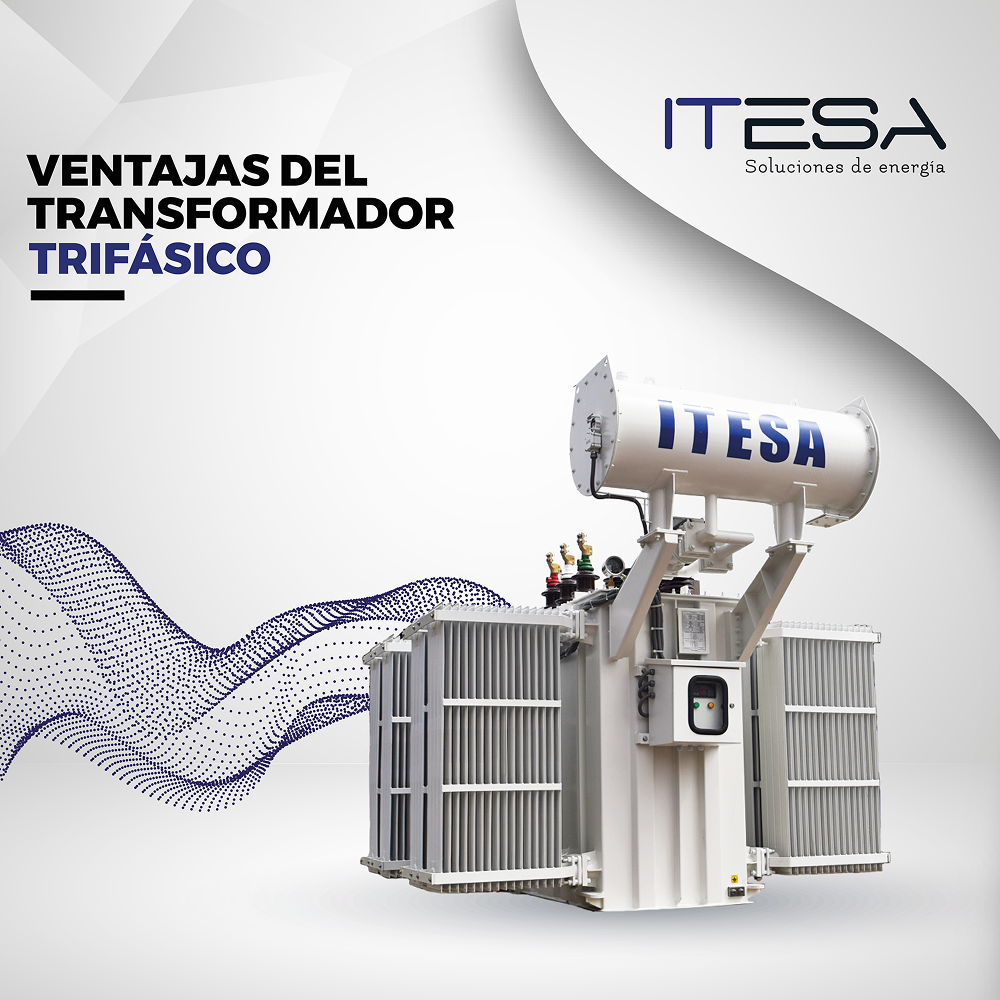
Three-phase autotransformers are products commonly used in industry. Although they serve the same purpose as a standard transformer, they possess different characteristics that enhance the performance of electrical equipment. Does this introduce new advantages in the market? That’s a question ITESA will answer in this article—so stay and keep reading.
Characteristics of Three-Phase Autotransformers
Let’s start from the beginning. This type of transformer differs significantly from conventional models, as it features only one coil that functions as both the primary and the secondary winding. These serve as the input and output for electrical energy, respectively. However, the main function remains the same: increasing or decreasing power in a system. With this in mind, it’s important to note that there is no physical separation between the conductors—since the entire process happens within a single winding, where both high and specific voltages are handled.
In terms of usage, they are designed to generate power across various transmission systems. Three-phase autotransformers operate based on magnetic fields, making them suitable for DC circuits as well. They are usually made of electrical-grade steel to minimize core losses, compacted into thin sheets. This structure directs the magnetic flux in the same direction, maximizing magnetic permeability.
In other words, autotransformers are devices used to transform electrical energy from one voltage to another of the same type but with a different intensity. They are also used to reduce voltage levels and power circuits that require lower values—such as relays. Why are they called “three-phase”? Because they include three phases to carry out the transformation process.
What Are the Advantages?
Every transformer or autotransformer type has its advantages and disadvantages. However, it’s important to know some of these in order to make an informed purchasing decision. As we often say, all types are useful—but each within its respective scope, always taking into account the client’s specific needs. Below are some key benefits of three-phase autotransformers:
Lower leakage flux, which allows for better voltage regulation.
Reduced copper losses compared to traditional transformers.
High efficiency in performance, and they can be designed according to exact specifications while delivering the same input and output power.
While single- and three-phase types do not provide electrical isolation between input and output, an autotransformer can be a viable solution for step-up or step-down applications where isolation is not required.
A three-phase autotransformer is generally much smaller and more compact than an isolated three-phase transformer, yet it offers similar capacity. This makes it suitable for installation in various locations, while also reducing weight and lowering overall costs.
What About the Disadvantages?
Contrary to what many companies believe, disclosing product disadvantages does not mean a loss in sales. On the contrary, it reflects honesty and transparency during the buying process, helping clients find the ideal product while also identifying a brand that truly cares about meeting their needs. No product is perfect, and in this case, three-phase autotransformers have two key limitations:
They are not safe to use for applying high voltages to low loads, since there is no electrical isolation between the primary and secondary windings.
Three-phase autotransformers are not very effective at eliminating harmonics and can act as a source of ground fault currents.
In conclusion, depending on its features and applications, the transformer winding is used only for the high-voltage circuit and can be built with lower-gauge wire because it does not carry high current. This makes it a more economical and profitable option for businesses.
At ITESA, we specialize in the manufacturing of transformers and related equipment—either custom-built to project specifications or ready for immediate application.
Contact Us
Reach out to us to learn more about three-phase autotransformers.